Norseman mechanical fitting

Back in 2005 we replaced our rigging in Trinidad. As part of the deal with Trinidad Rigging, I asked Jonas to be involved with everything like an apprenticeship to learn everything about our rig. He took it quite seriously, even had me buy and study the “Sail and Rig tuning” book from Ivan Dedekam.
Our rig has swage fittings at the top and Norseman fittings below, so he taught me how to install both. That was the last time I installed a Norseman fitting. Ten years later, production of Norseman fittings ceased and the run on replacement cones started and three years after that Tylaska started making those cones, allowing continued re-use of Norseman fittings.
As part of our Profurl rebuild we’re also replacing the forestay and this is the first where we replace the upper fitting with a mechanical one as well. We opted for a Stalok fitting there, which have a proven track record at a somewhat affordable price. These fittings are a bit different, as are the instructions and some of that is important and some is just recommendations. It’s important to know the details when you do this work yourself.
What is important is how much of the core strands extend from the cone. For Stalok this needs to be 3mm but for Norseman it is 1.5 times the wire diameter. As my wire is 1/2”, this means the core must extend 3/4” from the norseman cone compared to only 1/8” from the Stalok cone. That’s a big difference!
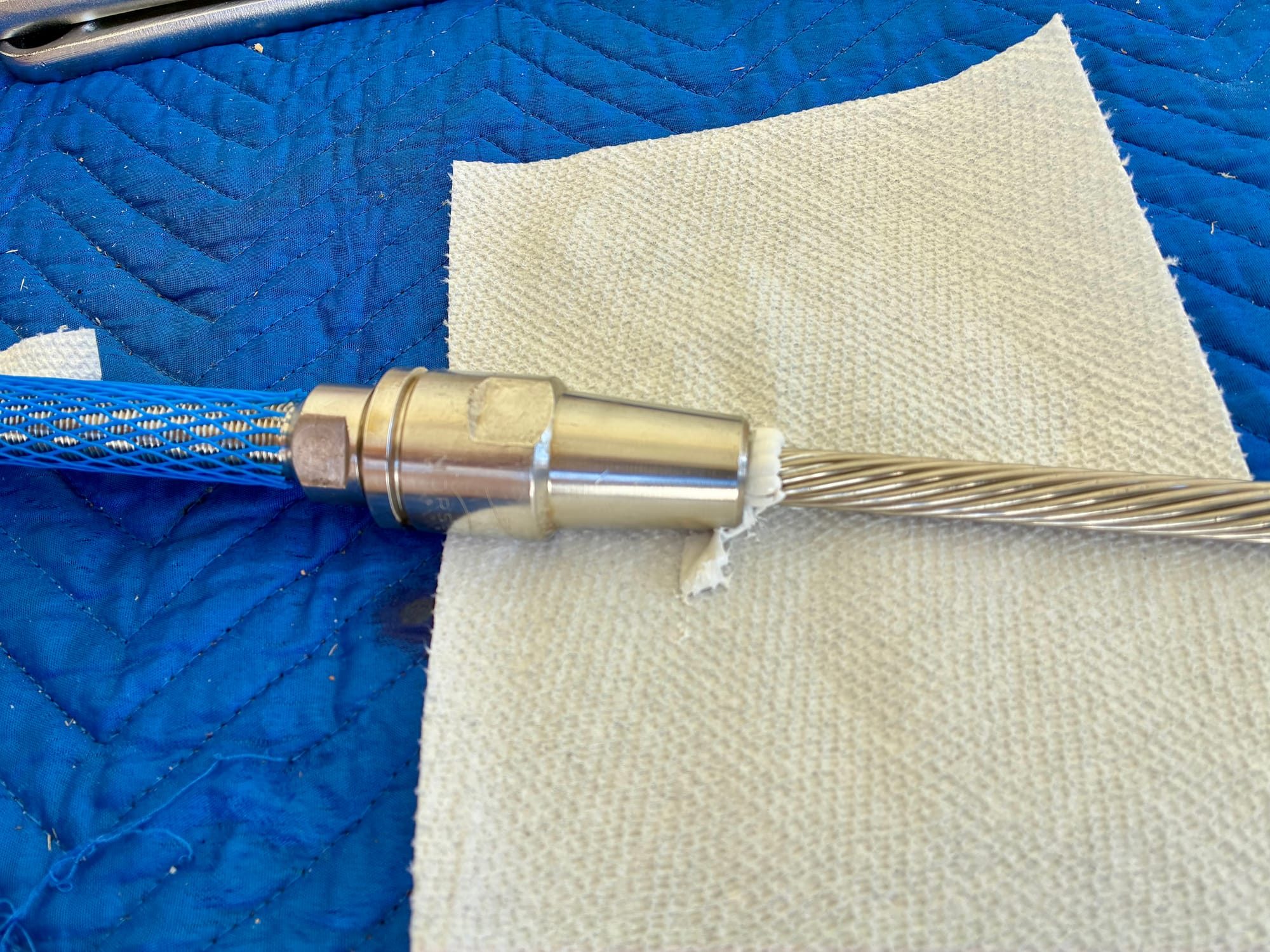
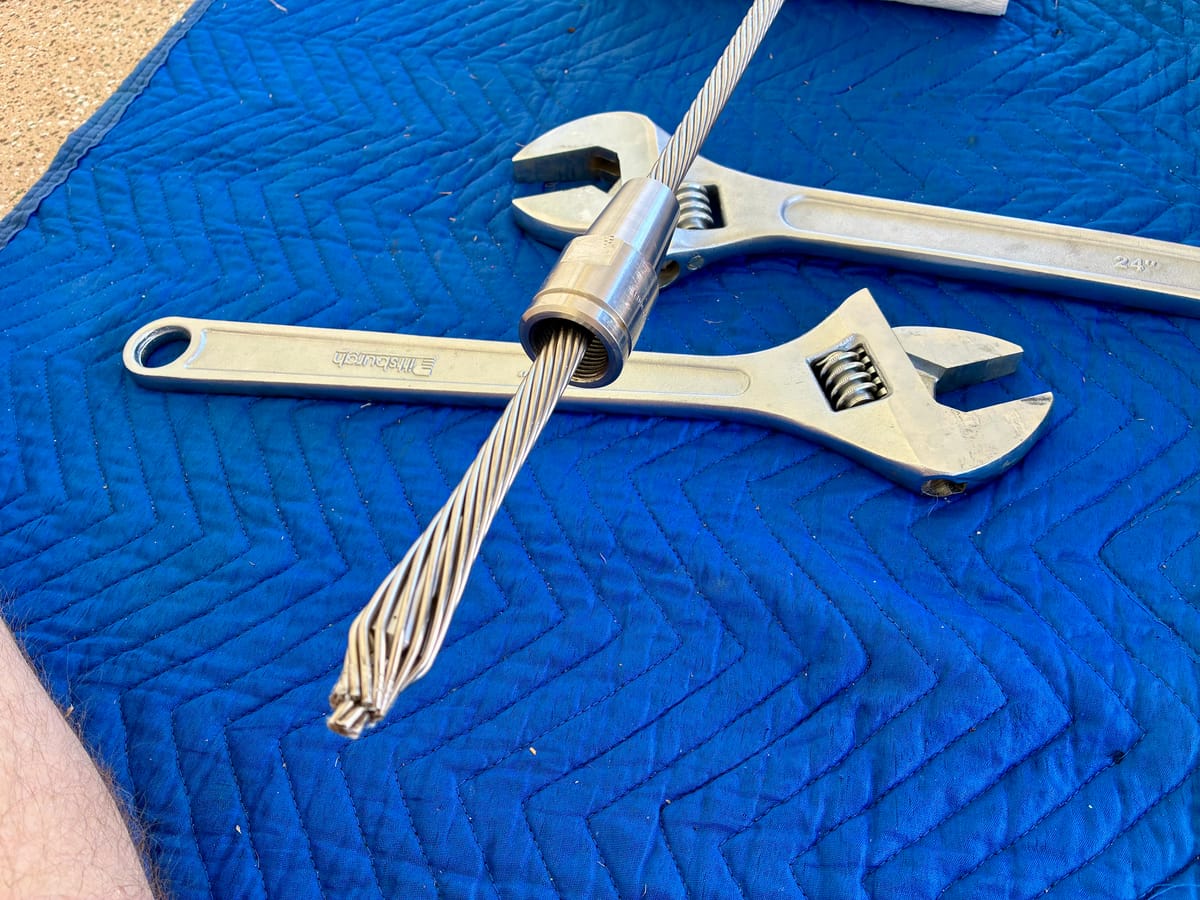
All the rest we do exactly the same for both. The Stalok comes prelubricated and for Norseman we add some anti-seize so that the stainless-on-stainless threads don’t gall. Then we install the cone according to the instructions and we screw the fitting together to form the strands around the cone. After that, we unscrew them again and inspect the results like in the picture above. When everything is in order, we clean the threads with non-chlorinated brake cleaner and add a sealant that is compatible with stainless steel and screw the fitting back together. We keep adding sealant until it squeezes out along the wire, then we clean about 10mm of exposed thread, add thread sealant and tighten it for the final time.
Stalok states the sealant is optional and thread locker is only recommended for a forestay with furler but riggers do this for every fitting as the sealant has proven to be effective in preventing corrosion despite stainless steel wanting to breathe and thread locker gives some extra security.