Halyard cleat for furling jib

We have been testing different halyard setups for our roller furling jib for more than 10 years. Our preference is to use a two part halyard, i.e. a permanent part and a second part that is only used during hoisting and lowering the jib.
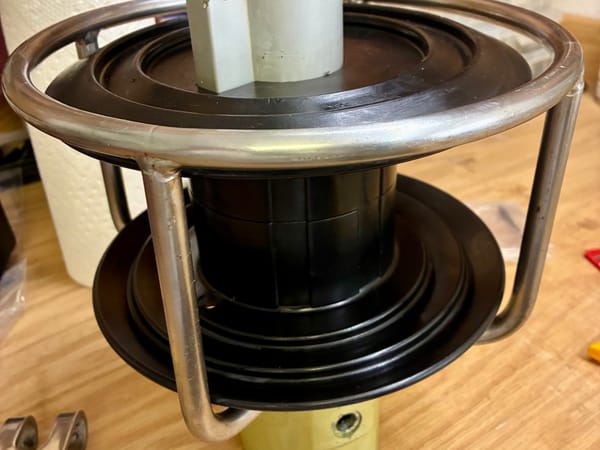
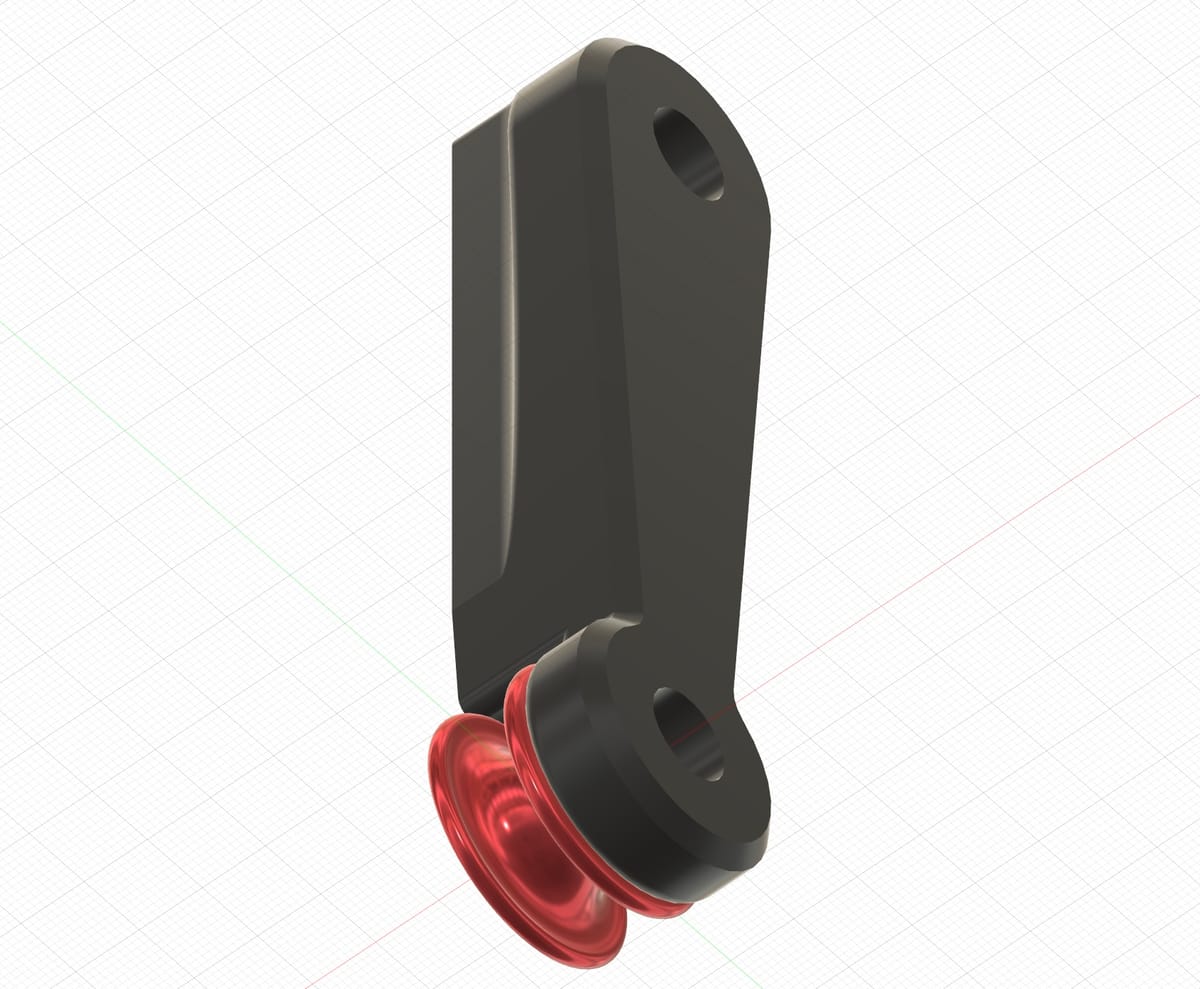
The rendering above shows a low friction ring captured in a 3D printed part. It attaches to the mast with two socket-head machine screws that fit the threaded holes of the rope clutch that it replaces.
One of the most important things to get right is that the halyard doesn't wrap around the forestay, which can lead to disaster incl. dismasting. This always means that the fuller upper swivel must be hoisted high enough. We use a ProFurl system which has a no-wrap device that you hoist the swivel against and which prevents the upper part of the swivel from turning. Other systems use a sharper angle between swivel and halyard where again the height is crucial.
The permanent part of the halyard is a high tech single braid line. We use 6mm Samson Amsteel Blue which has a fantastic track record aboard Jedi. The end that attaches to the swivel has an eye splice of about 2" diameter and we cow-hitch it to the ring or shackle of the curler swivel. We use a Brummel lock on this splice and a relatively long bury so that we have a couple inches of spare material.
The other end gets a larger eye splice, about an 8" diameter, also with some extra length but no Brummel lock.
For the hoisting part of the halyard we use regular Dacron/polyester 10mm double braid. Here we make a Flemish eye (reeving eye) splice at each end. A Flemish eye splice is made with just the outer braid, so not very strong but still more than strong enough to hoist a jib.
We link the two parts together with a piece of 2.2mm Samson Lash-It. This is a Dyneema single braid which holds knots, designed for lashings. We tie this permanently to the Amsteel Blue halyard eye with a small bowline. It's simply looped through the Flemish eye a couple of times then locked with some half hitches.
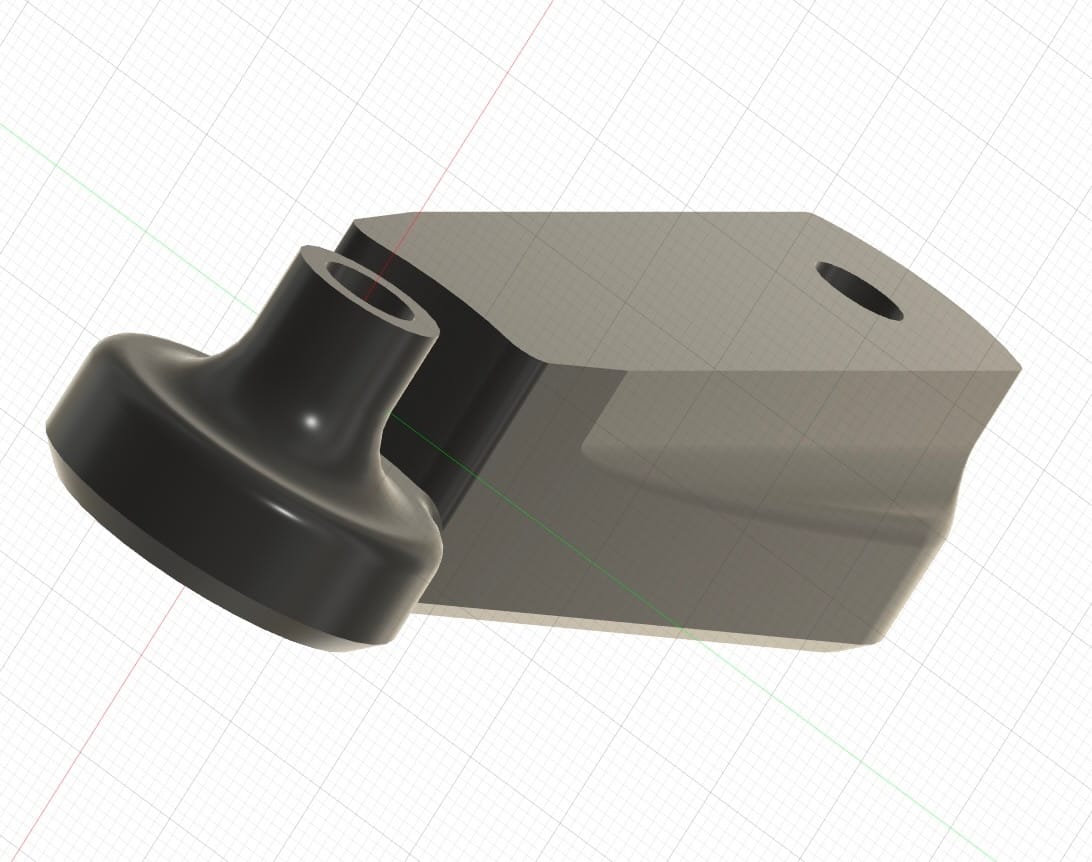
When the jib is hoisted all the way up, the Amsteel part emerges from the slot in the mast and is placed around the cleat shown above so that the Amsteel eye sits in the integrated low-friction ring. The hoisting part of the halyard is then removed and the Lash-It is left hanging down the mast for the moment.
Next, the jib luff is tensioned using a separate lashing from the tack of the jib to the attachment point at the furler drum, after which the jib is furled.
Returning to the halyard cleat, the Lash-It is used to lock the eye around the cleat by tying a few half hitches around the eye just above the cleat. At this point, the Amsteel eye is retained behind the shoulders of the cleat and cannot be pulled off. The half hitches draw the eye together above the cleat, preventing it from slipping downward and creating slack around the low-friction ring at the bottom.
The design can be downloaded for free below; it can be adjusted by changing the parameters in the design. It now has mounting holes for two M8 socket head screws that are 107mm apart like for a Lewmar DC2 rope clutch. Both the diameter and spacing are parameters in the design, as are the dimensions of the low friction ring, for which I used the Antal R14.10 here.