Calypso wind sensor setup

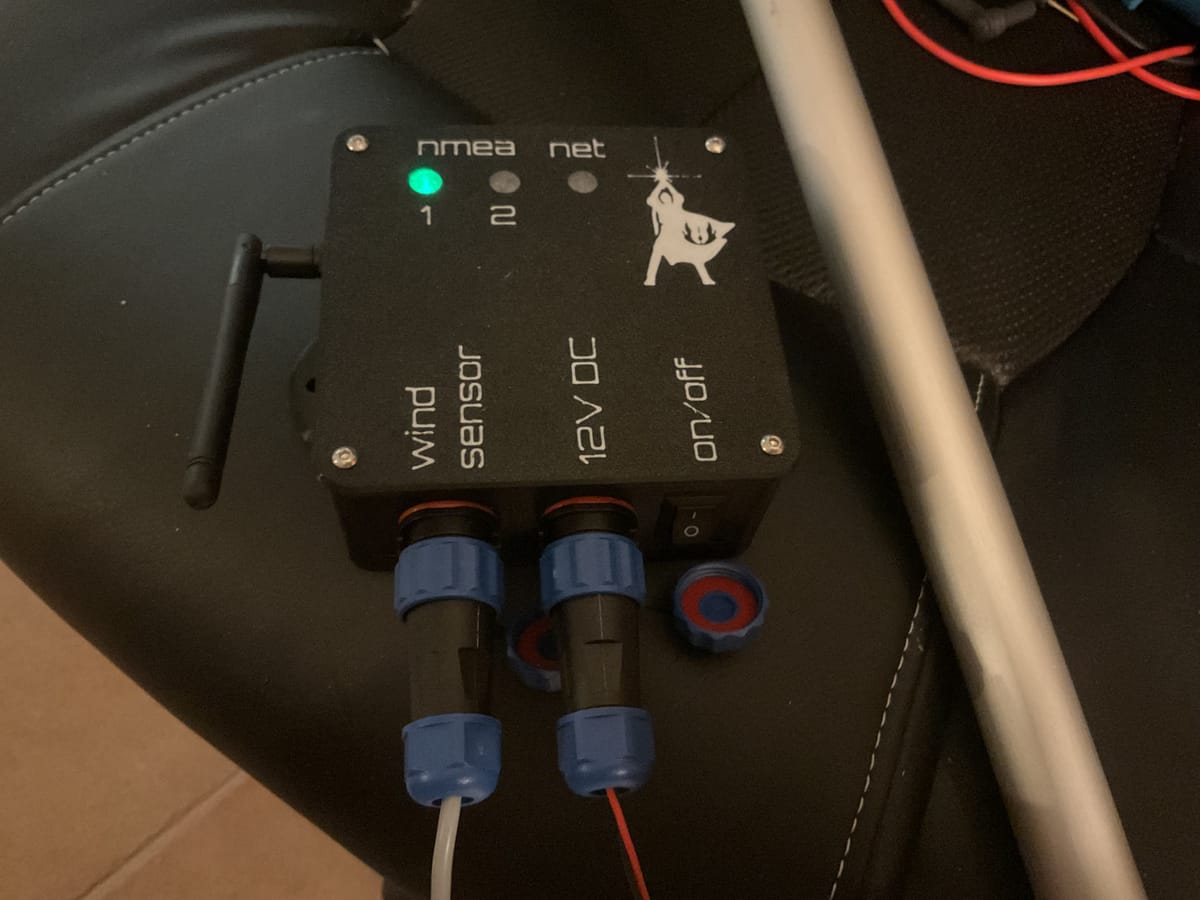
Now that we have all the parts, we can decide on how we will set it up. We already have the 1-meter high vertical pole for the sensor with a mount for the masthead. We hope that we can use the old B&G cable in the mast. All the rest needs to be organized.
We decided to stream the NMEA0183 data from the sensor via wifi to create an air gap in case the sensor is struck by lightning. For this we use a YachtDevices NMEA0183 wifi gateway. This doesn’t convert the data to NMEA2000, it just broadcasts it via UDP packets on our boat local IP network. The socket used for this also has a YachtDevices NMEA2000 Ethernet Gateway active which does all the conversions between NMEA2000 and the IP network. The wind sensor isn’t the first device communicating here: we also have a NMEA2000 wifi gateway that connects two VHF radios and the AIS transceiver the same way and for the same reason: all of these have antennas exposed to lightning at the mastheads.
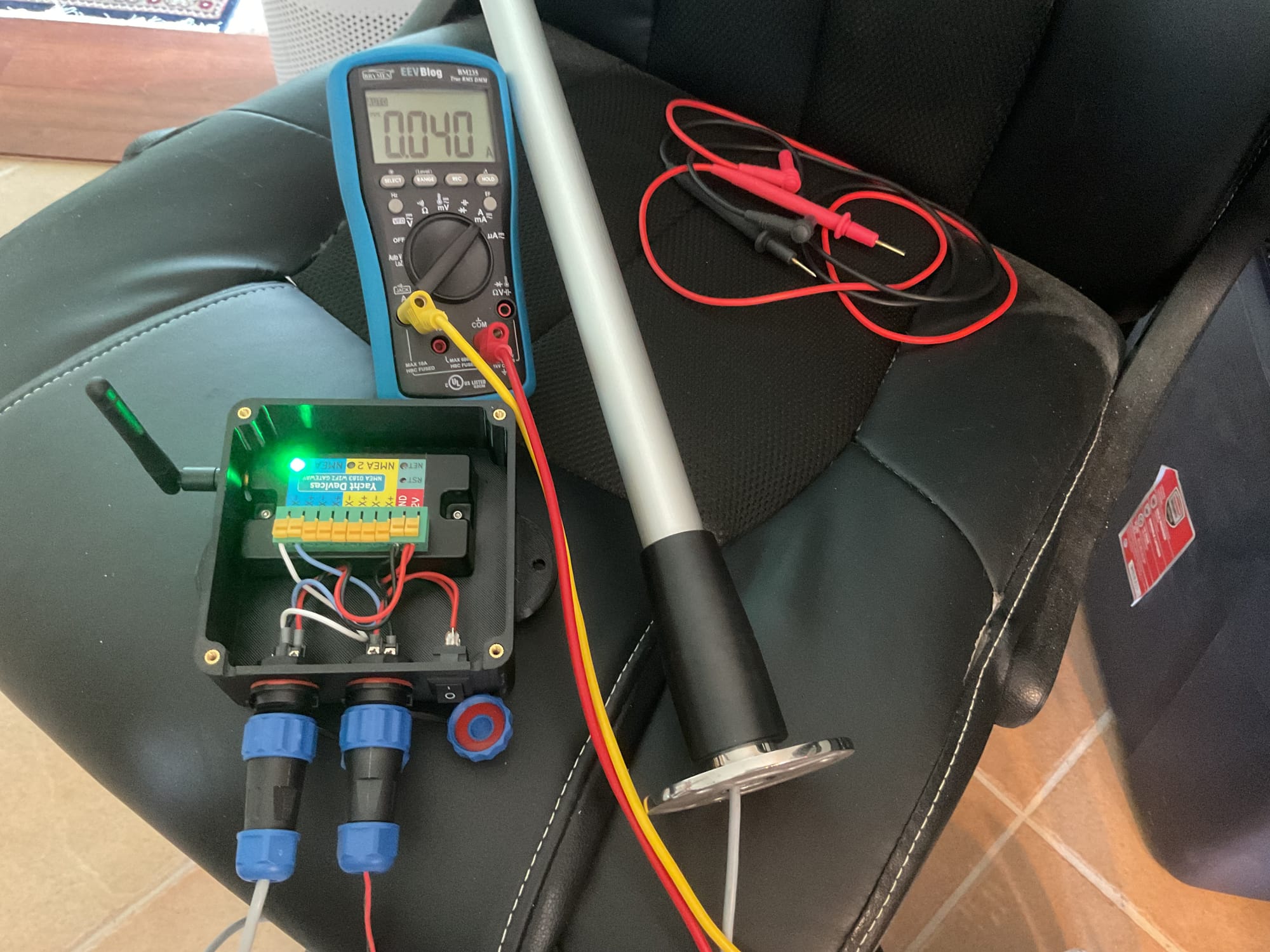
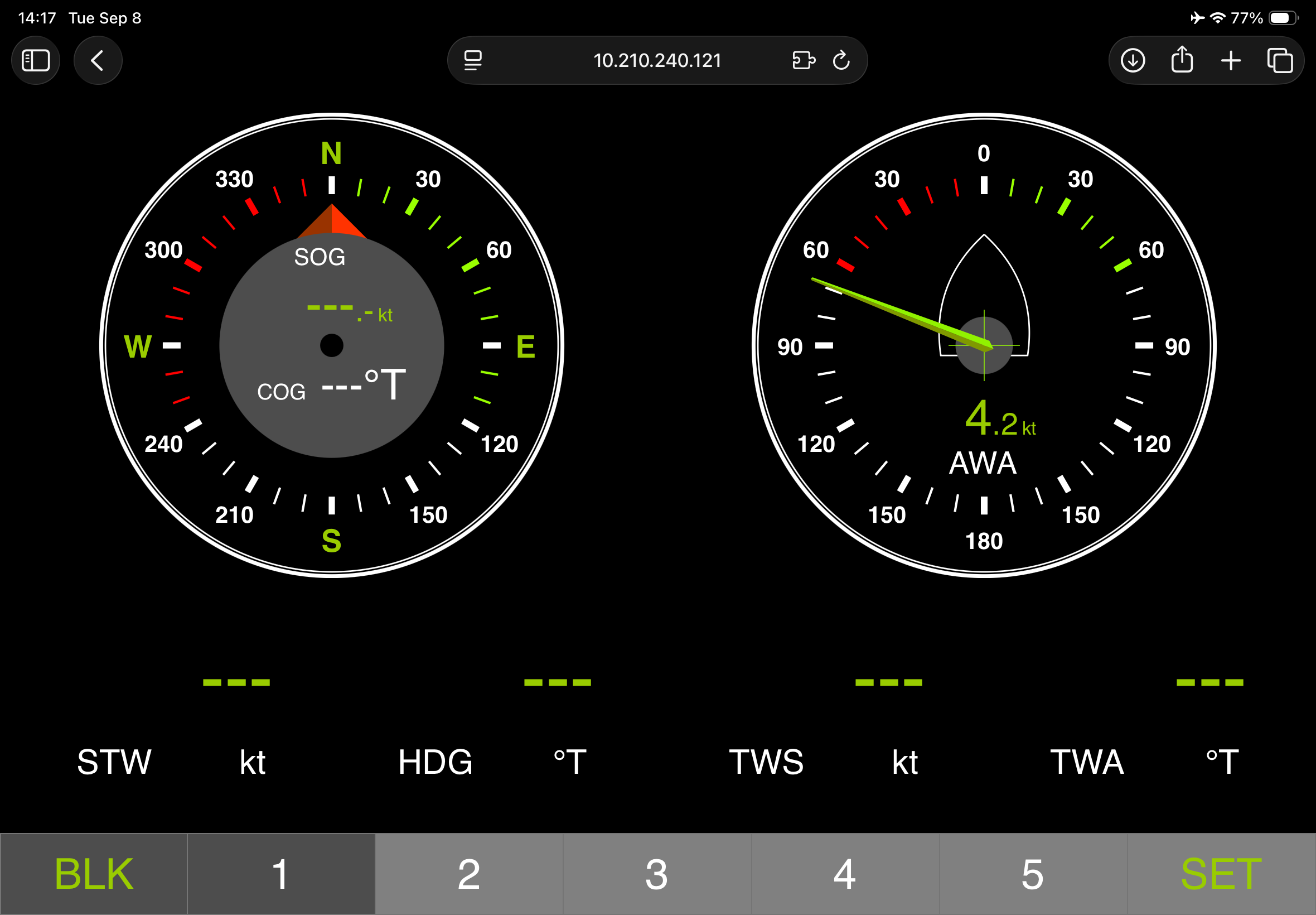
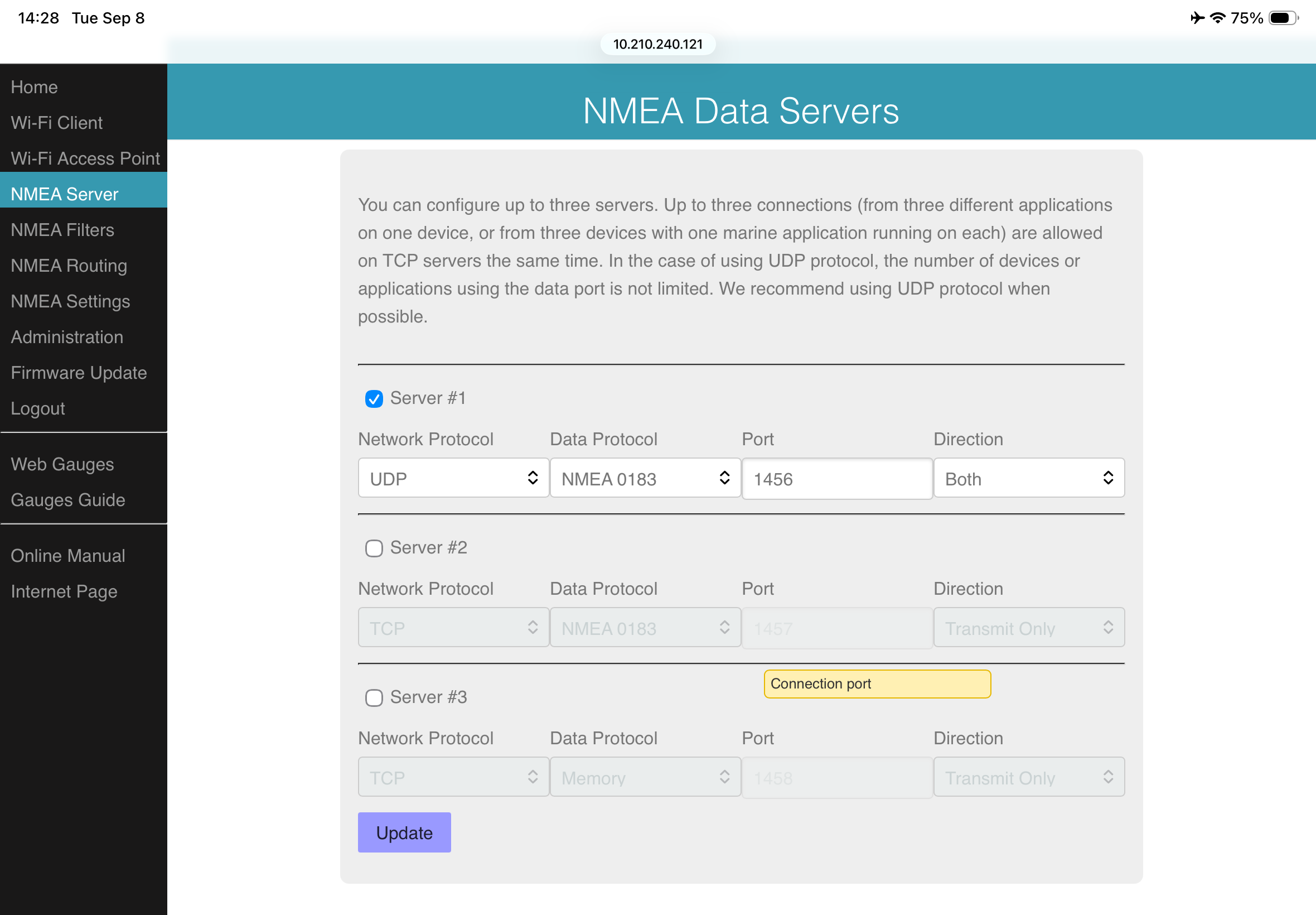
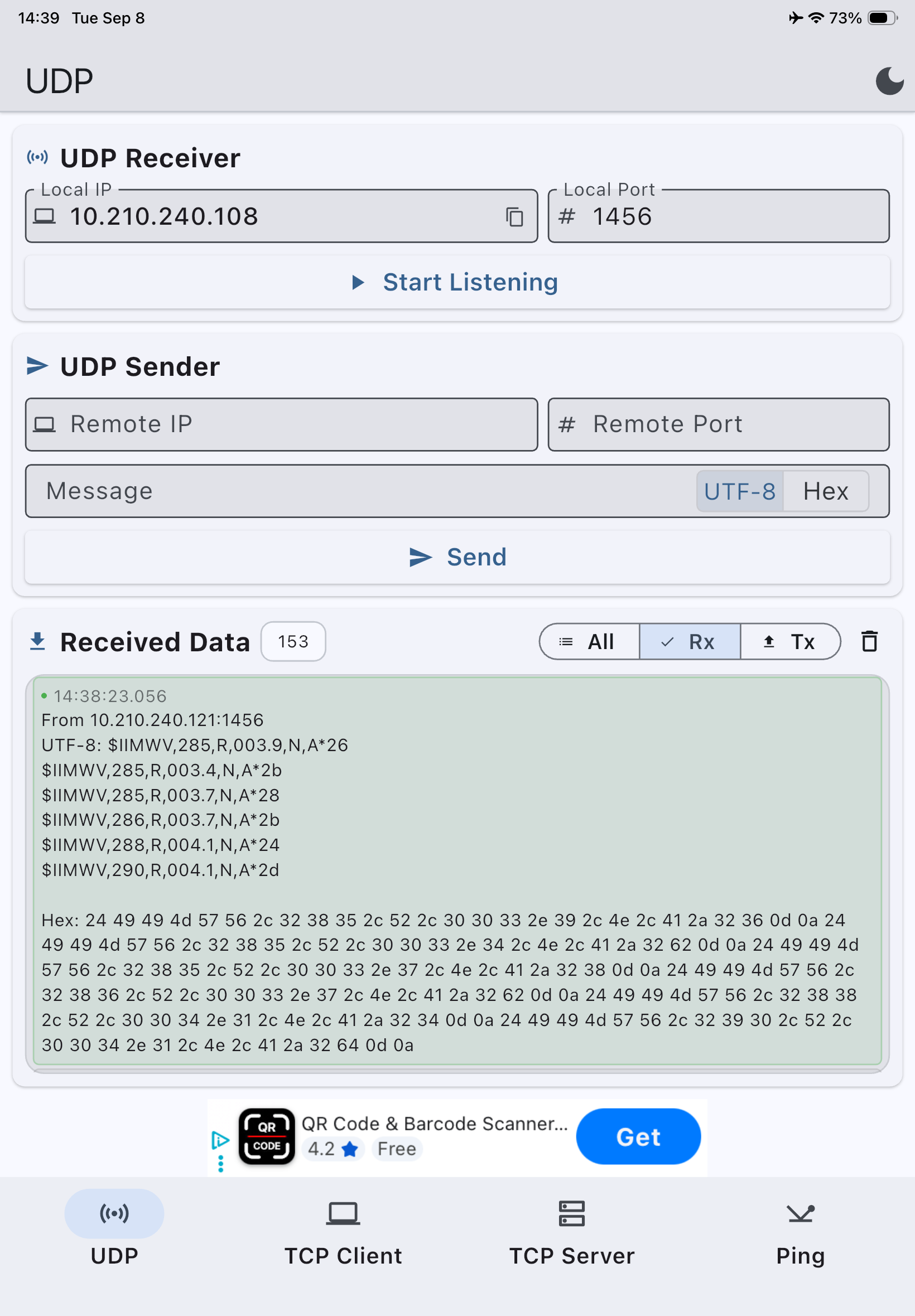
the first picture above shows the inside of the junction box that will be installed at the base of the mast. It has the wifi gateway, connectors for the wind sensor and power, plus an on/off switch. The second picture shows the web gauges as available on the gateway showing apparent wind angle and speed working. The other two pictures show the configuration and a UDP scan of data sent.
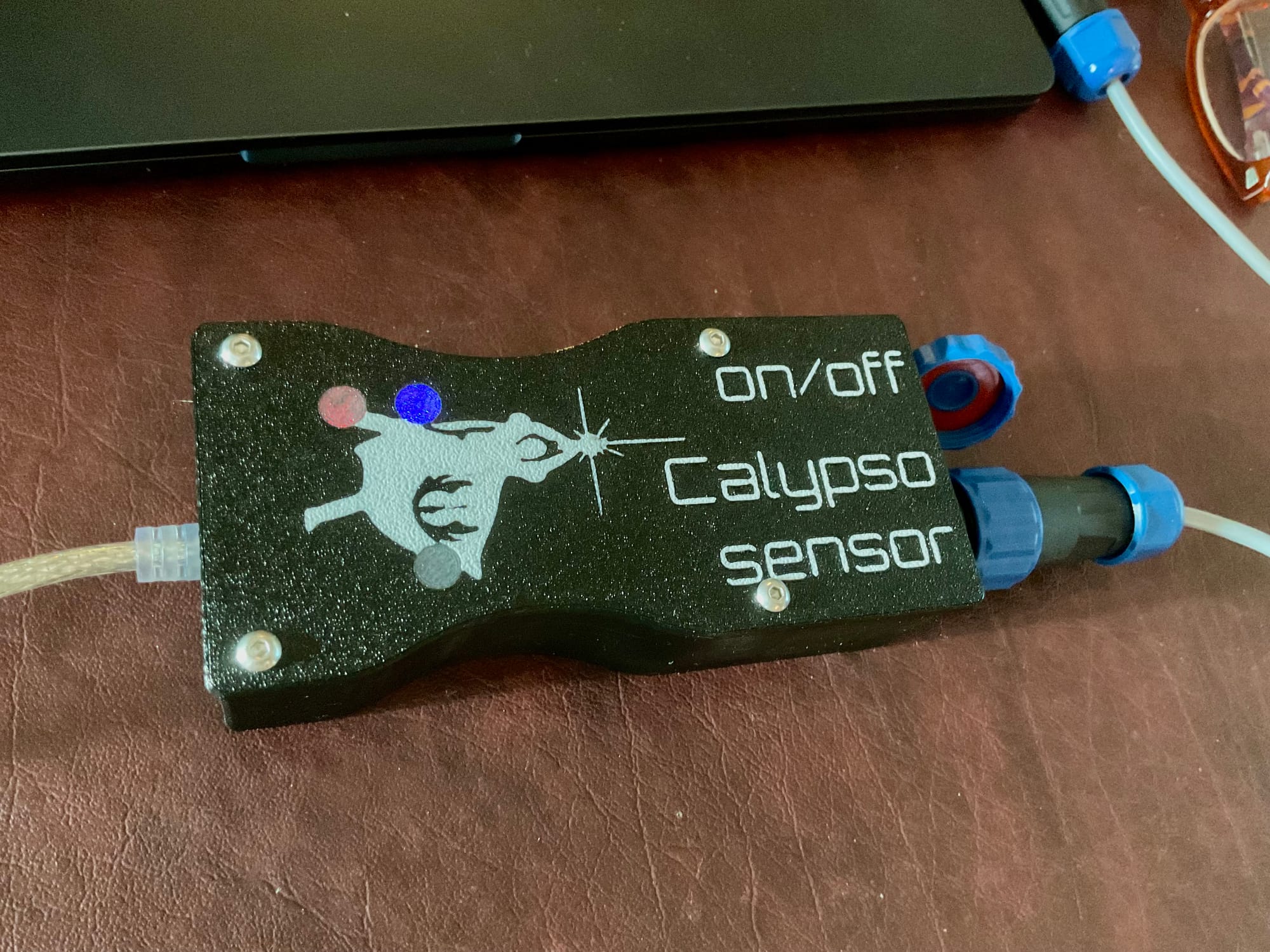
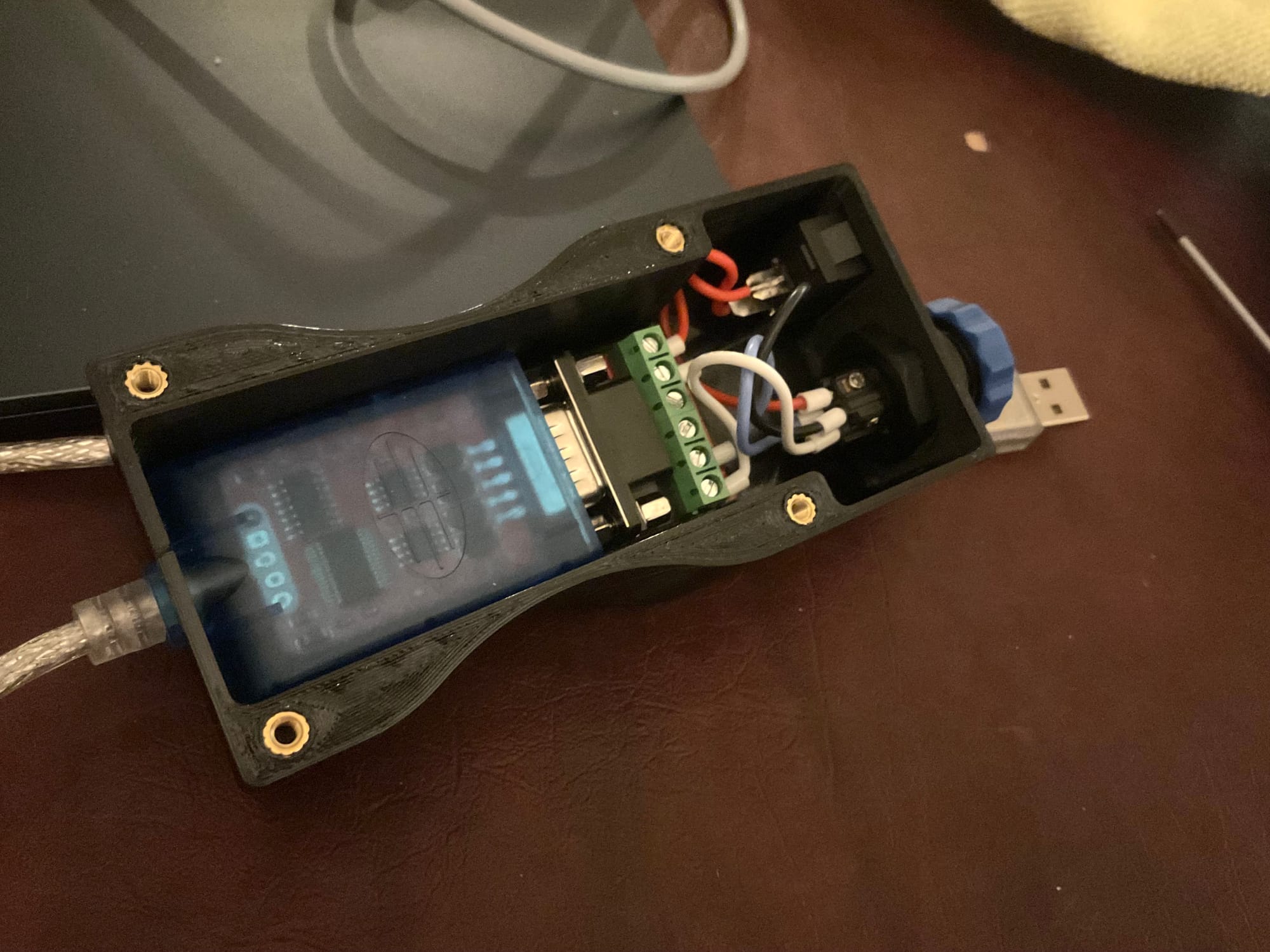
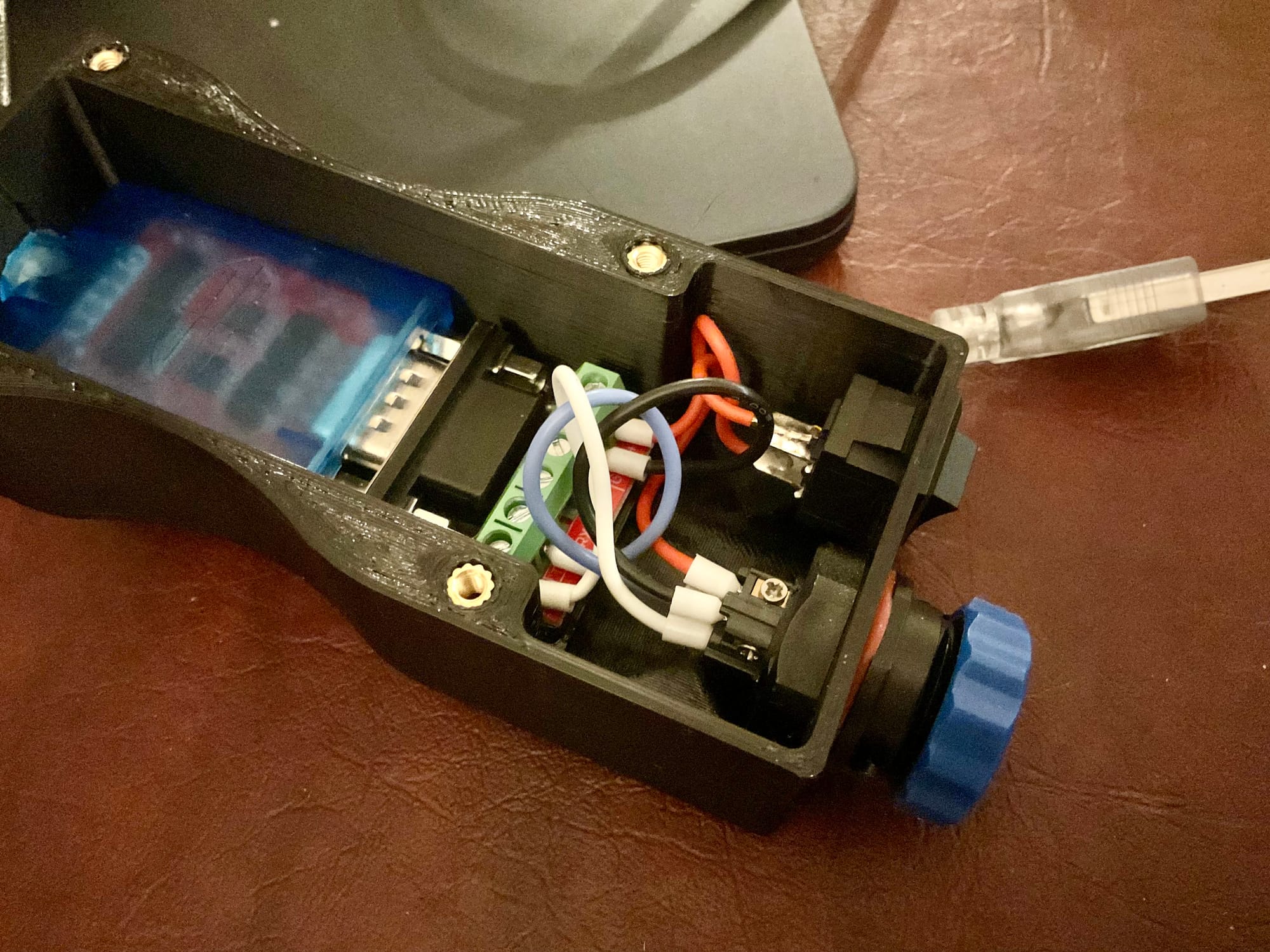
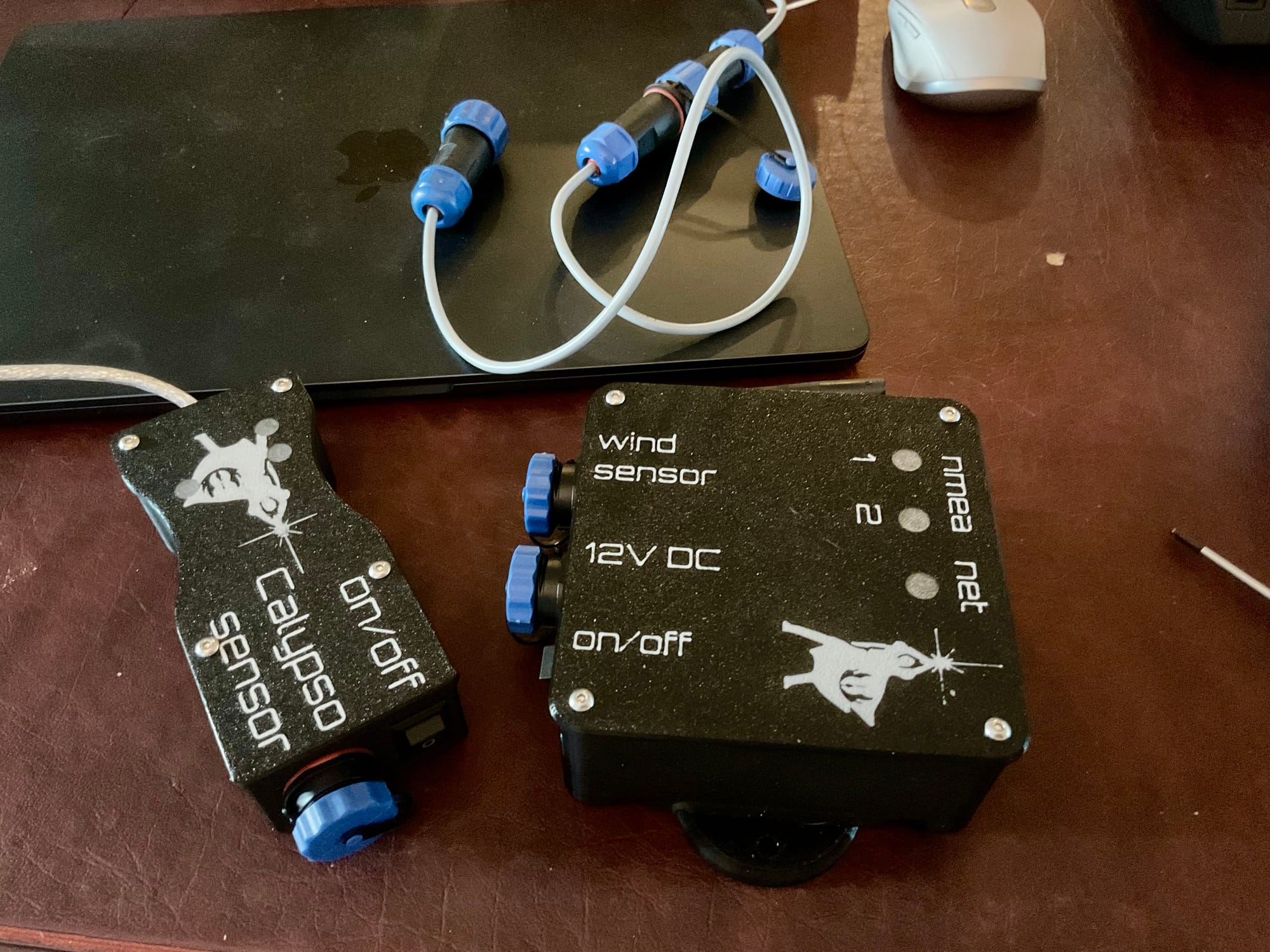
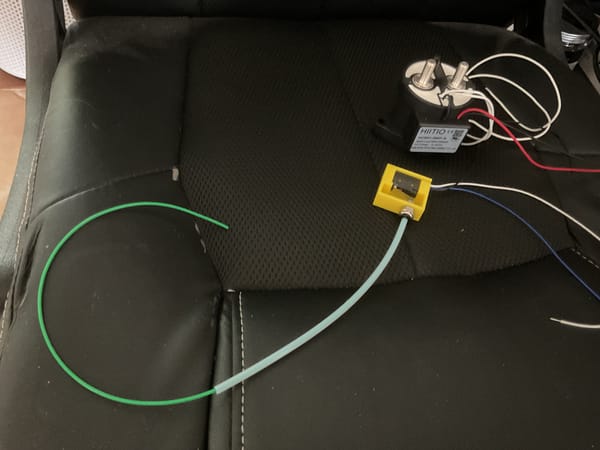
The second box is for configuration of the sensor. It holds a RS-485 to USB converter, an on/off switch and a connector that accepts the cable from the wind sensor. When the wind sensor is plugged into this box instead of the wifi gateway, it is powered from the computer’s USB port. The configuration software instructs the user to click the connect button before connecting the power to the sensor. This is handled by the switch here.
The connectors are all weatherproof aviation style and readily available on Amazon. There will be one set of connectors at the masthead and a second set at the mast base. The power feed comes from an isolated DC-DC converter that also powers the VHF radios and AIS transceiver. This way we keep everything that is exposed to lightning separated from the other systems.
This unit is now ready for installation 👍