The big gearboxes

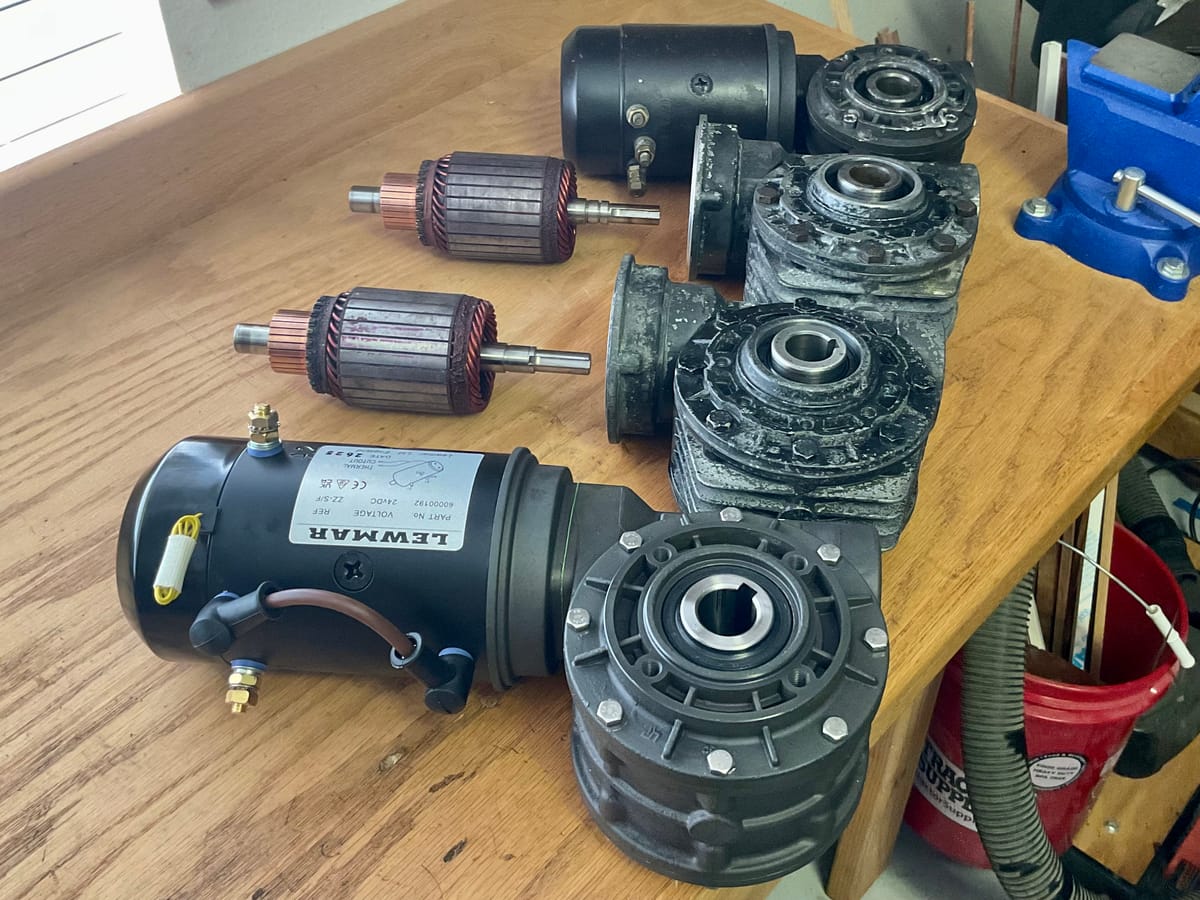
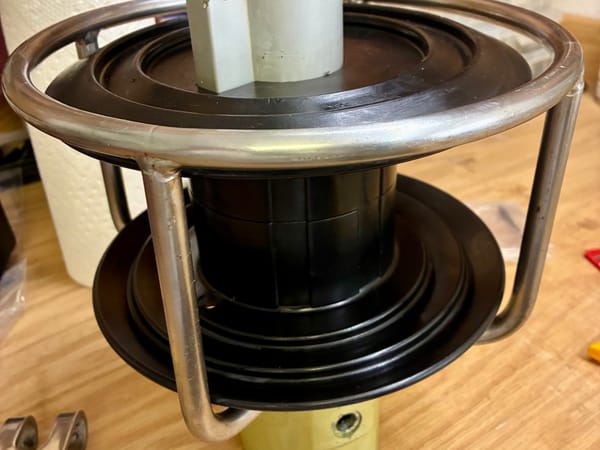
After rebuilding the gearbox for the Lewmar 44, we look at our big winches: one 58 and two 66’s. These have the same motor/ gearbox units. The two 66’s are our primary winches and the starboard winch was in a bad state when we bought this boat and it has been downhill ever since. Upon opening the gearbox we found all the oil hardened and the worm shaft completely destroyed by rust. The other two were in surprising good condition so I proceeded to rebuild those.
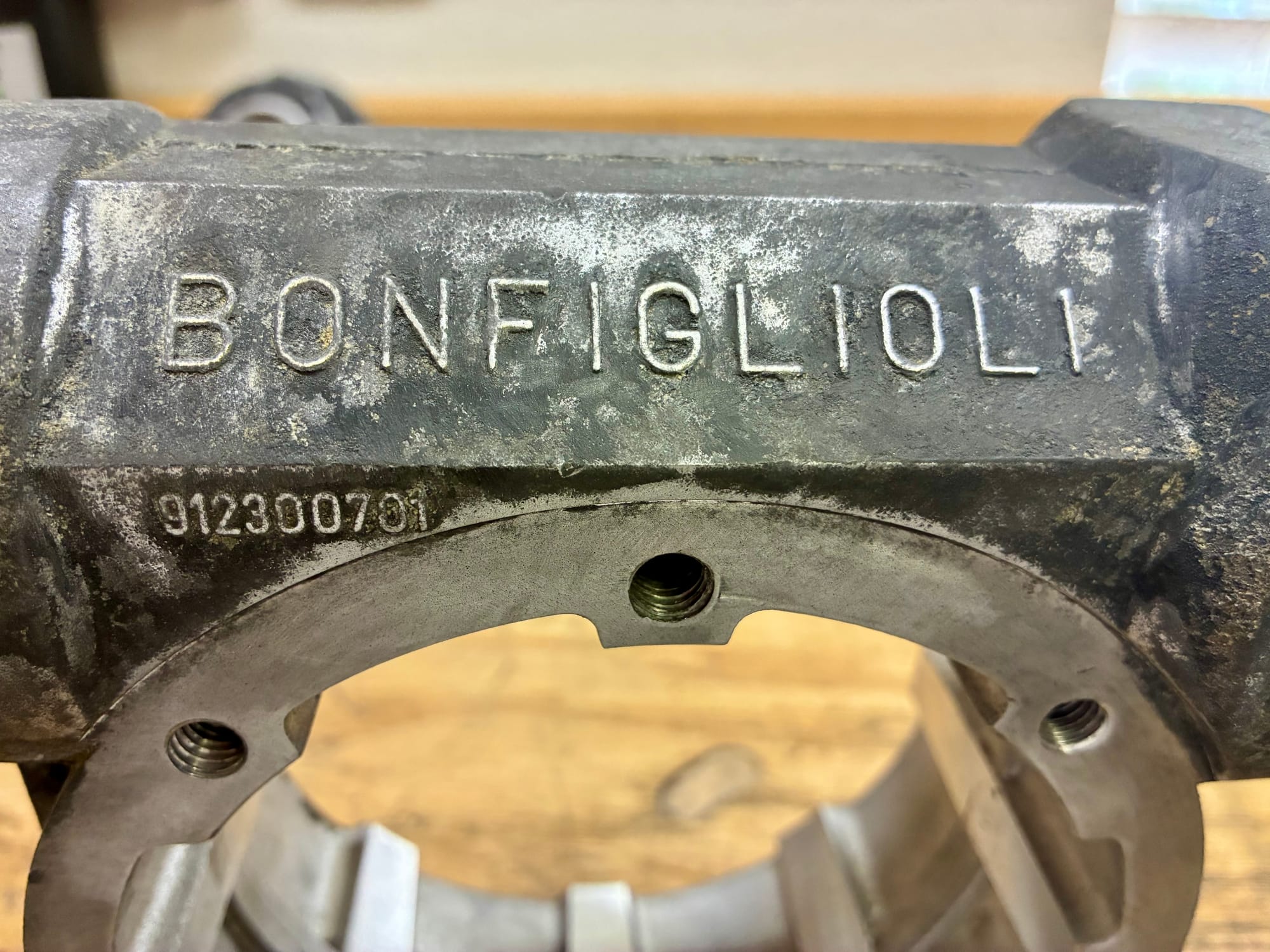
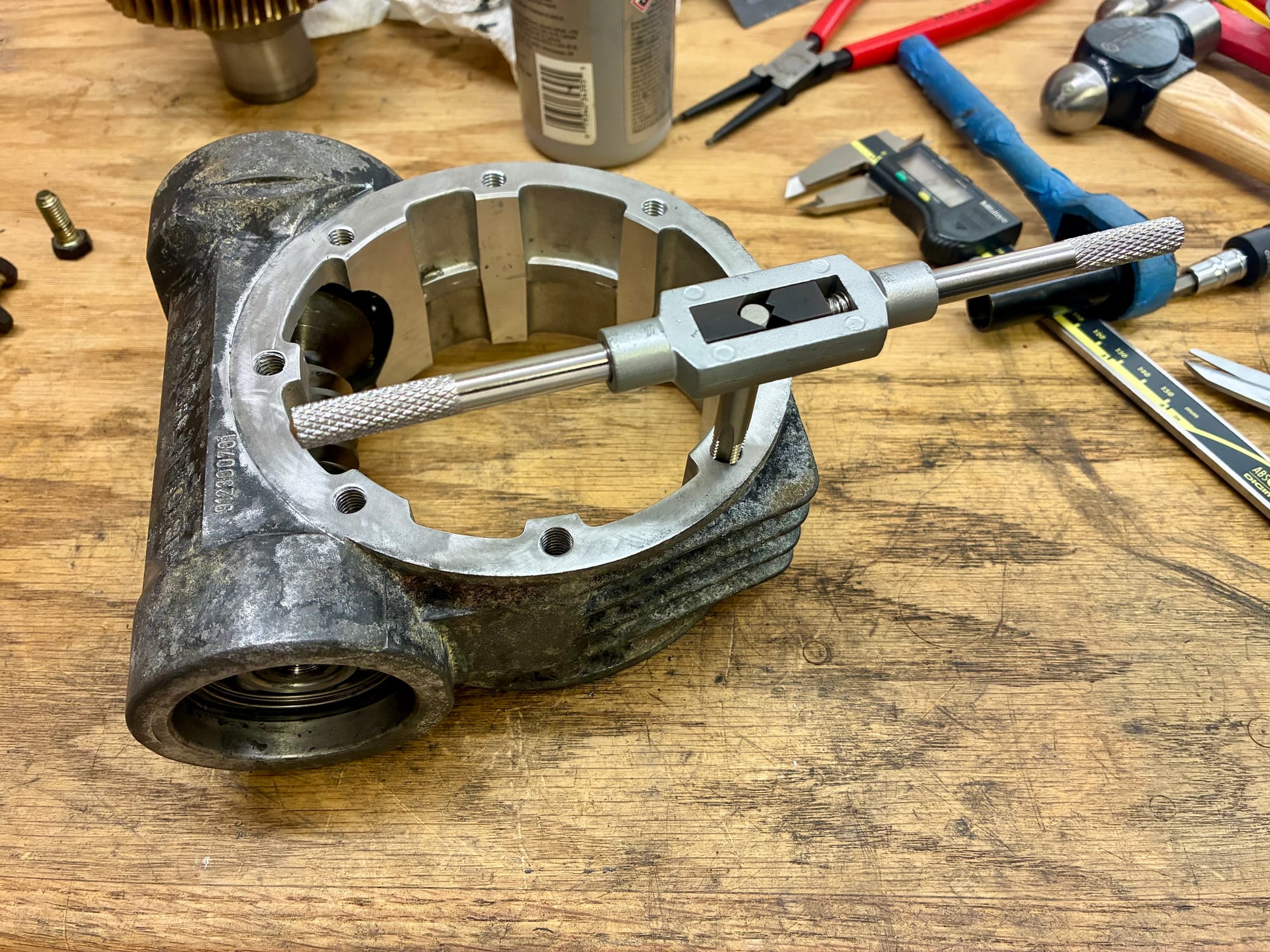
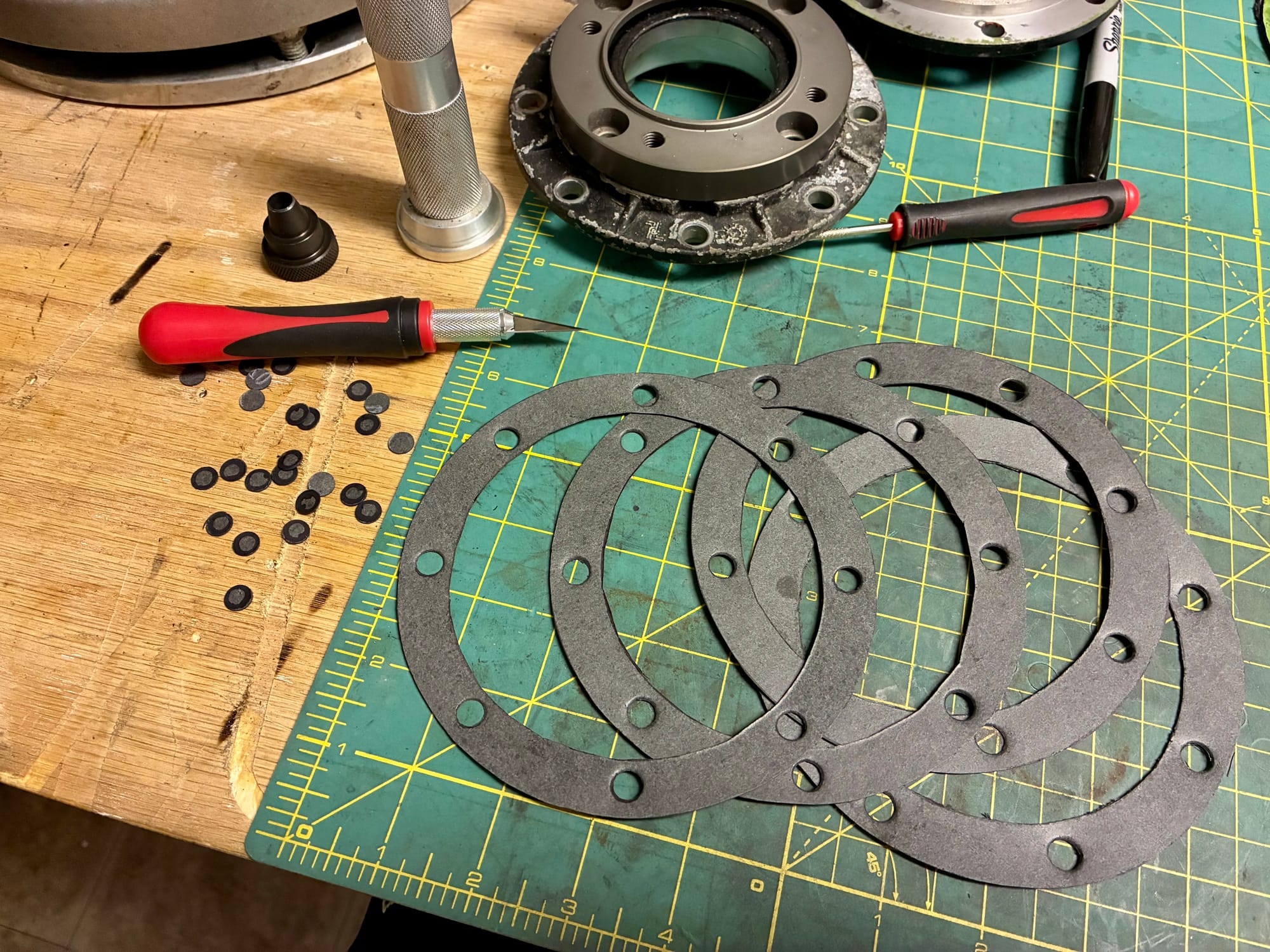
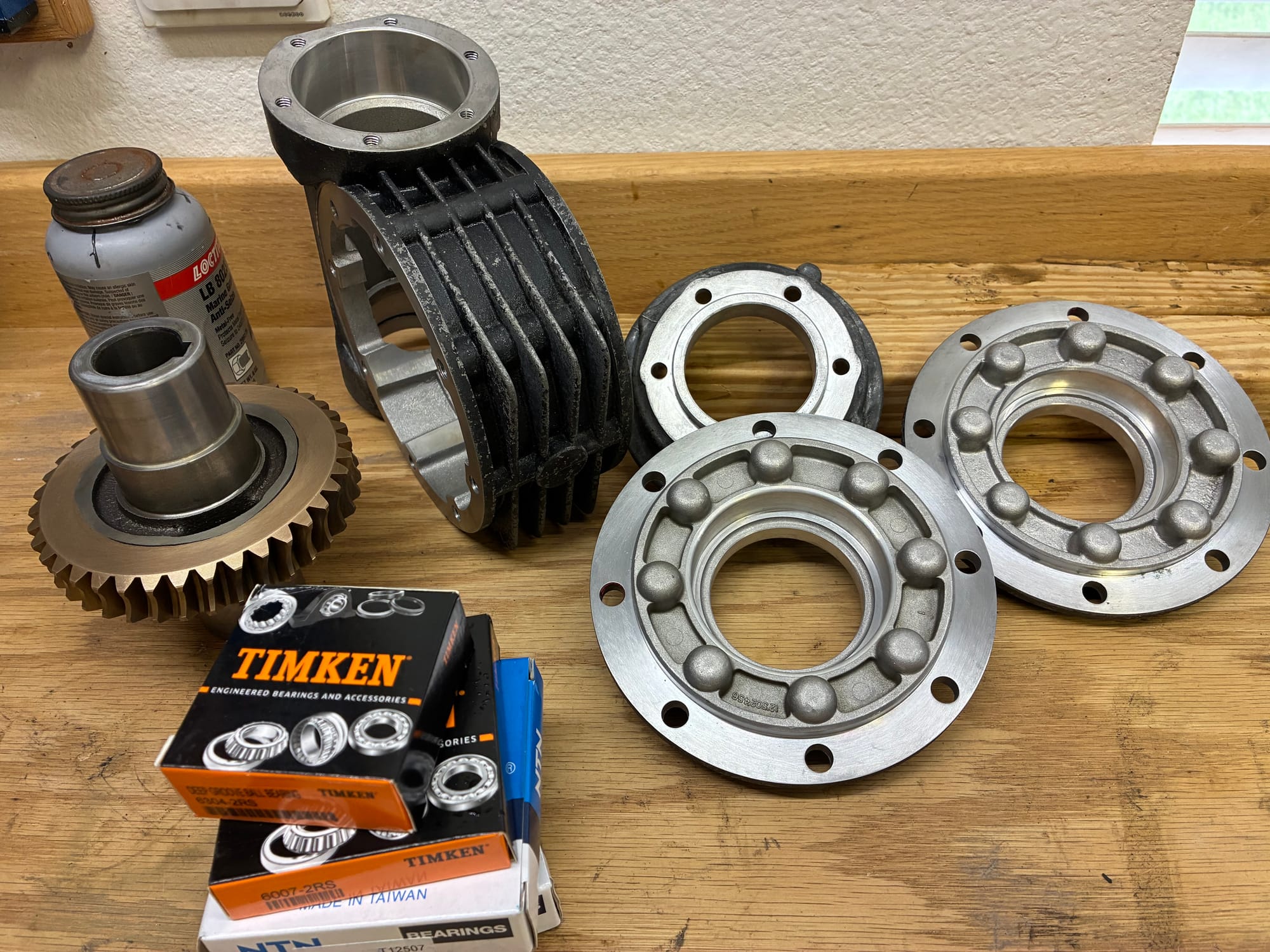
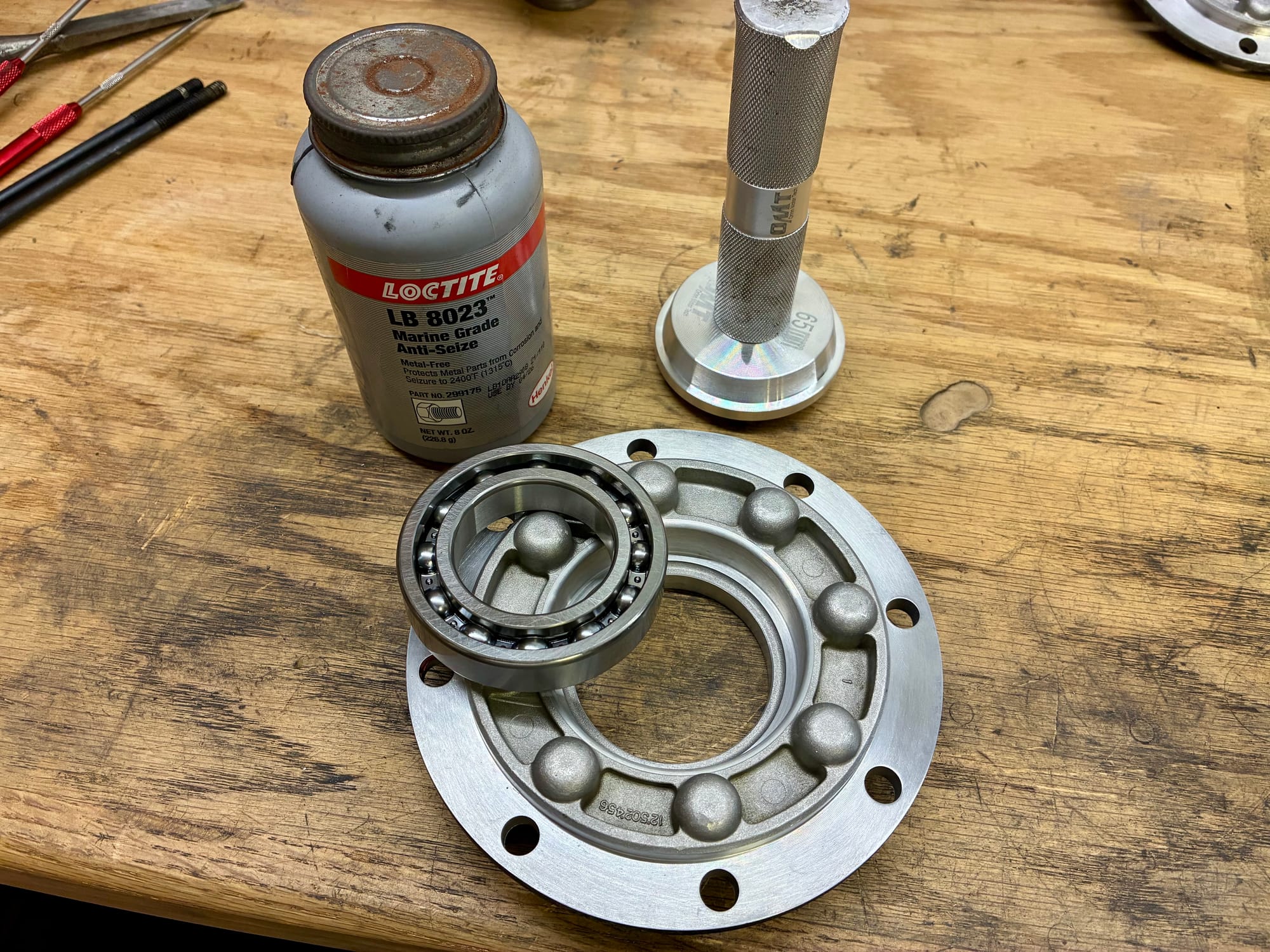
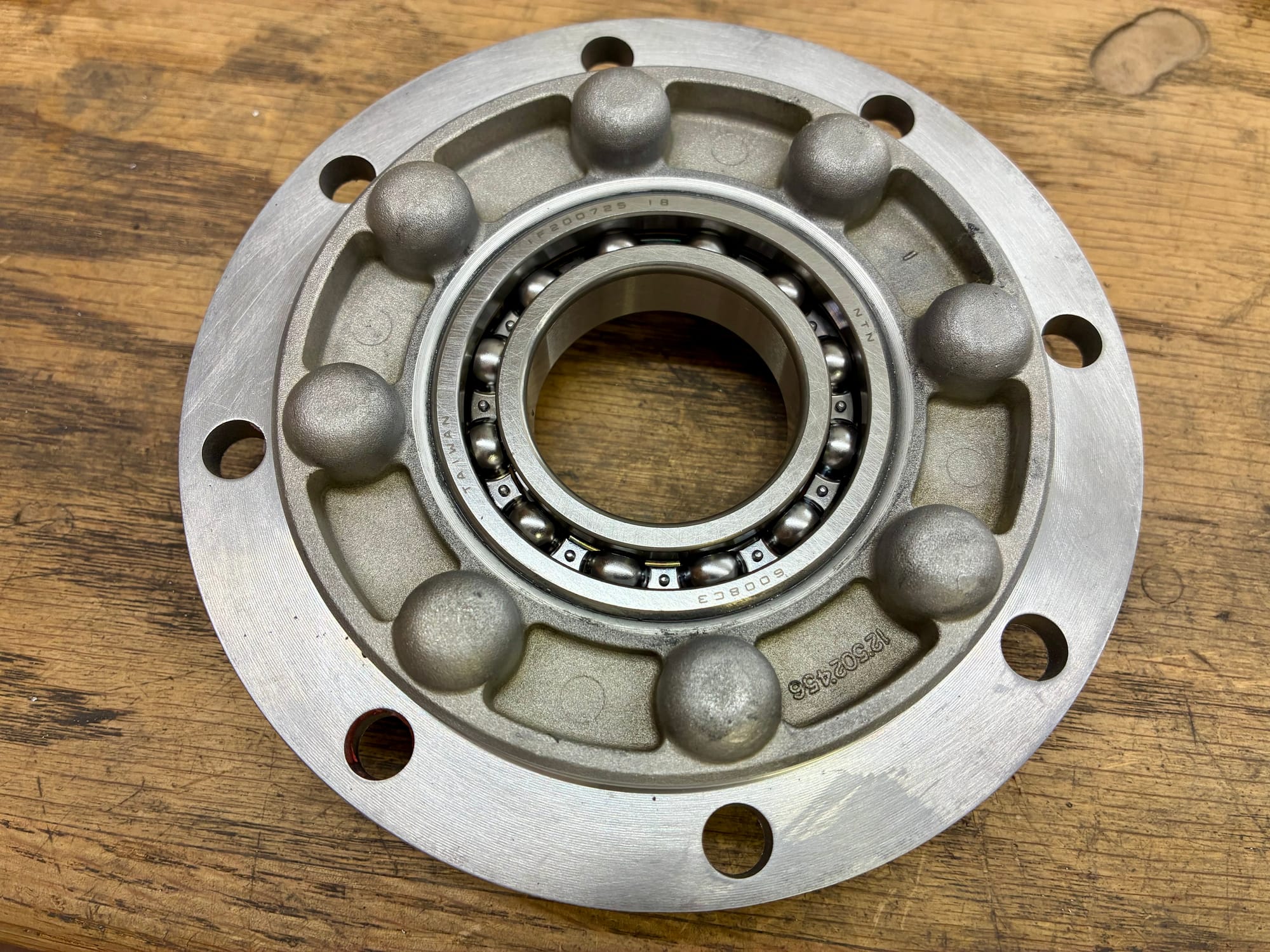
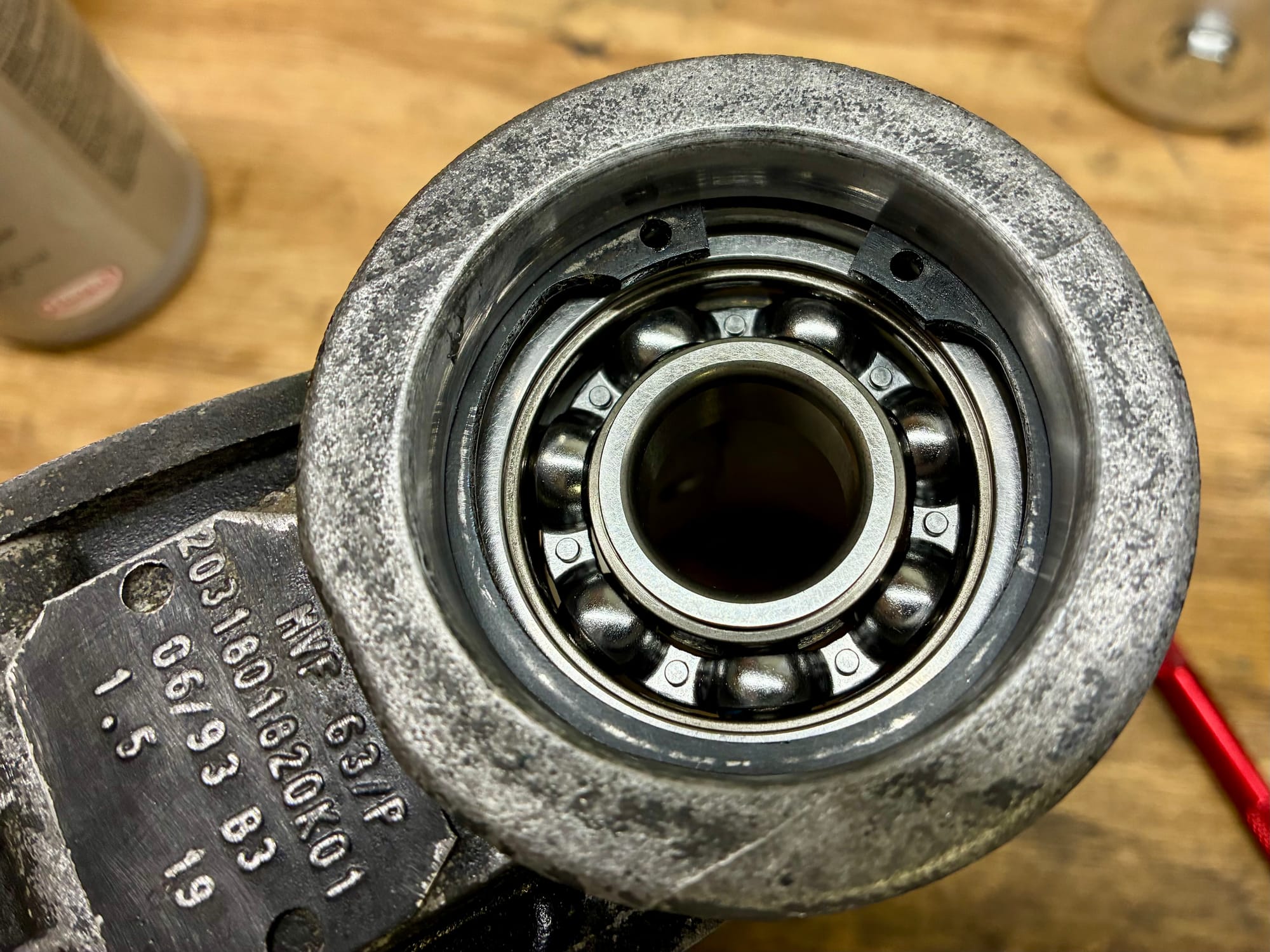
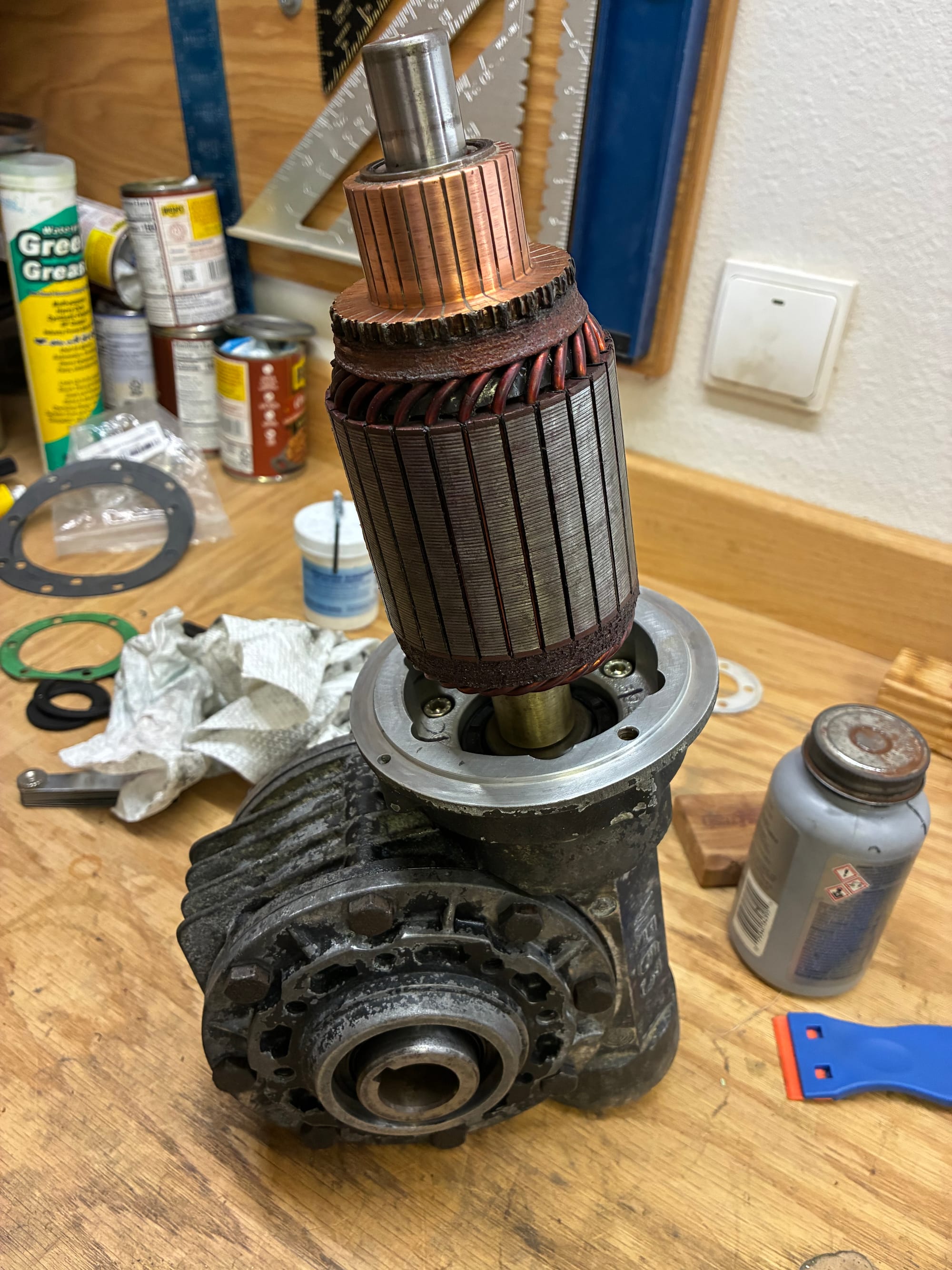
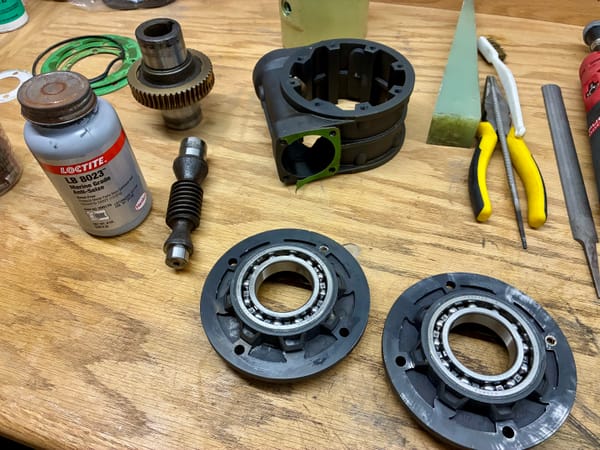
each gearbox got 4 new bearings, 4 new seals and 3 new gaskets. They are 19:1 ratio as I later found on the plate of one, including date of manufacture etc. With pictures of all the markings, ChatGPT could find a complete specification including the amount of oil etc.
The cleaning and making paper gaskets is 90% of the job. I estimate total cost at $60 for each gearbox (and those are only available with new motor for $1,300 each) but note that is with cutting the gaskets yourself as they are not available as a kit.
I also cleaned the rotors but still have the stators to do which are pretty rough, which brings me to the new unit I ordered to replace the destroyed gearbox. Our winches are all still 12V but for this I ordered the 24V version. The first thing I did was take the motor off to see if it’s compatible and yes it is. The old ones have an adapter on the shaft which can easily be swapped to the new motor which has the exact same shaft and dimensions. You can see the double row windings of smaller wire with the new rotor compared to the old.
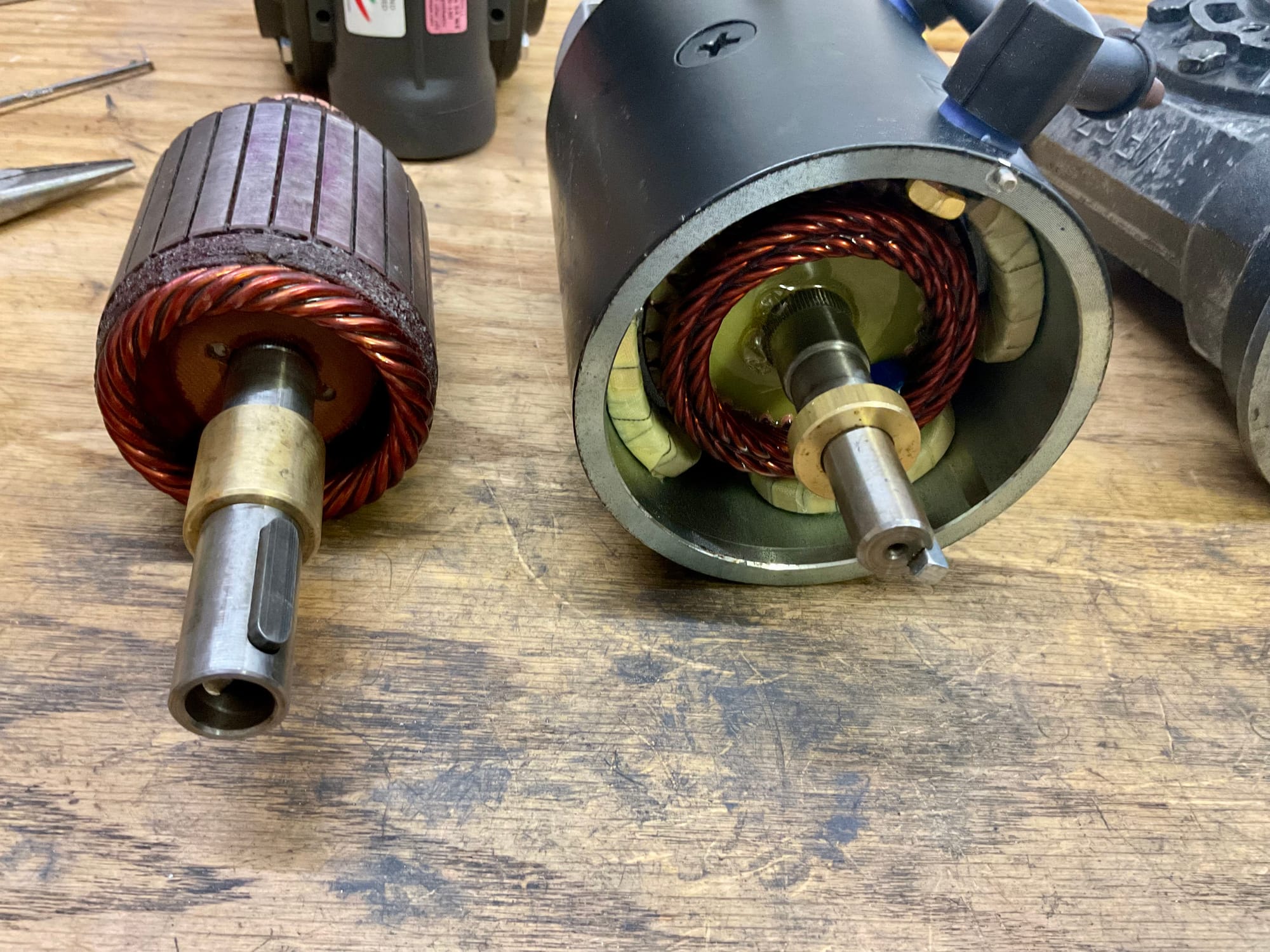
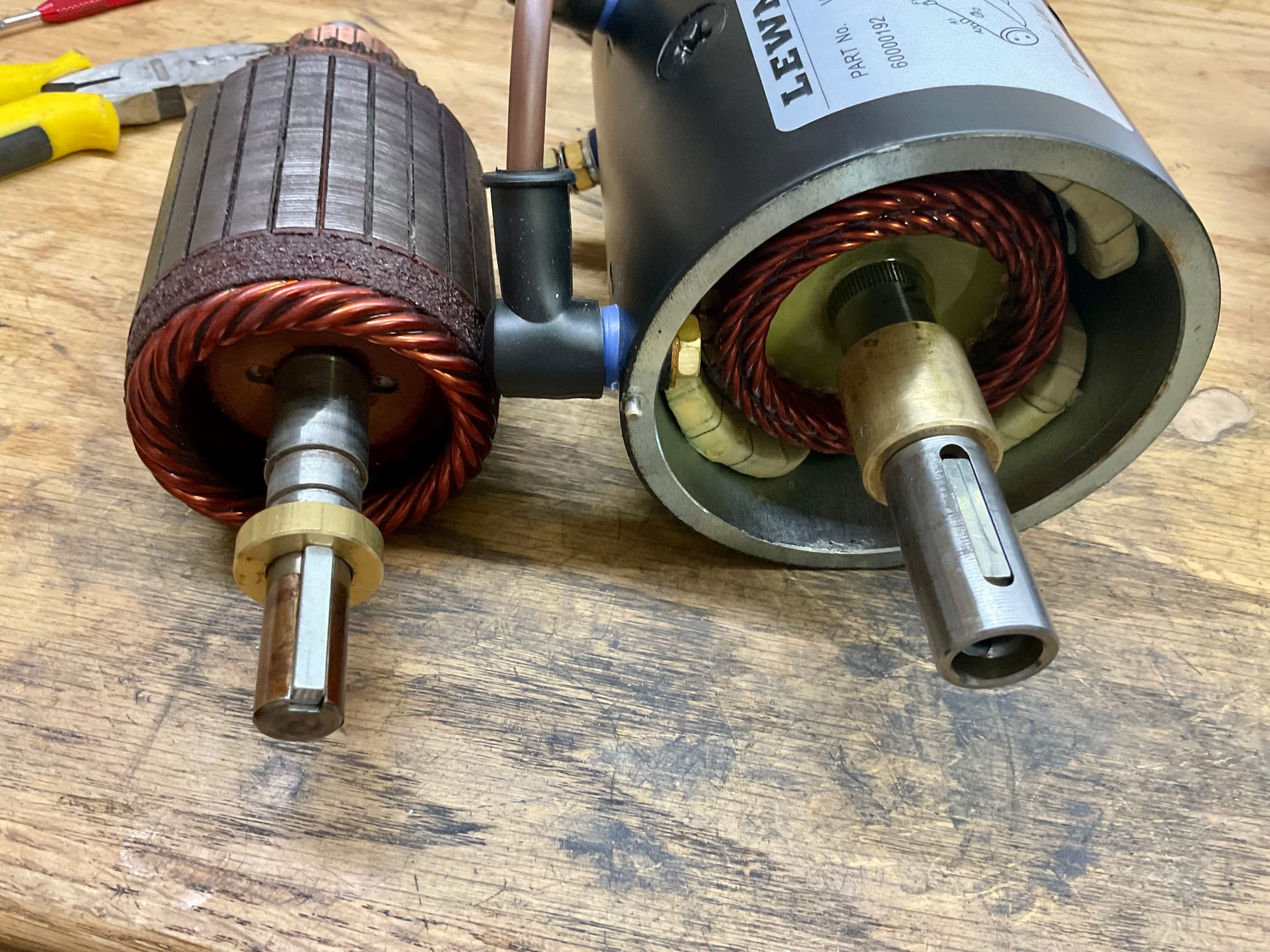
This means that when I find a problem with the remaining stators, I can buy just a new motor and upgrade to 24V. It’s great to see a 2026 product still fully compatible with a 1993 product… that’s 33 years later! I can see some good improvements on the new motor as well as the gearbox but functionality is still exactly the same.
Click this for ChatGPT research results
Identification
This is a Bonfiglioli MVF63 / VF63 worm-reduction gearbox, from the old Bonfiglioli VF family. The important markings now fit together very well:
Marking -> Meaning
BONFIGLIOLI -> Bonfiglioli Riduttori, Bologna, Italy
VF63 -> Gearbox frame/model size 63
912300701 -> Housing/casting identification number — not a serial number
92 in circular casting mark -> Almost certainly 1992 casting year
Other small circular symbol -> Appears to be a foundry/die/cavity identification mark, not another date
The strongest confirmation is that I found the exact number 912300701 independently associated with a Bonfiglioli unit described as TYPE MVF63/FC, code 203160243. That makes the identification much stronger than simply matching the shape or the VF63 lettering.
And yes: looking at your new close-up, I agree with you about the circular mark. The center clearly reads 92. This is the characteristic sort of removable date insert used in permanent molds/dies. So I would date the gearbox housing casting to 1992. The gearbox itself could have been assembled in 1992 or shortly afterward. That timing fits extremely well with your early-1990s Lewmar installation.
What “MVF63” tells us
The old MVF63 was an industrial worm gearbox, and Bonfiglioli documentation/interchange data gives some very useful hard numbers. The center distance was 62.17 mm, the standard hollow output bore was 25 mm, gearbox mass about 6 kg / 13.2 lb, and ratios were offered from roughly 5:1 through 100:1. The housing material is listed as aluminium, with synthetic-oil lubrication.
That ~6 kg number is interesting because a surviving discontinued MVF63/FC-INCH is listed at 13.56 lb / 6.15 kg. Even more interestingly, that particular FC-INCH version is specified as a 19:1 worm reducer.
So there is a real possibility that the Lewmar version you have is closely related to, or actually is, the MVF63/FC-INCH. I would not yet call your gearbox 19:1 solely from the casting, because the same VF63 housing could be fitted with different worm/wheel combinations. But 19:1 has now become a very credible number to check. One easy test is 19 input-shaft revolutions versus one output revolution.
The historical construction is also quite good. Contemporary Bonfiglioli documentation describes the worm shaft as case-hardened alloy steel with ground tooth flanks, while the worm wheel is phosphor bronze. That agrees perfectly with the parts you’ve been working on — steel worm engaging the bronze wheel.
The oil quantity is now essentially nailed down too
Bonfiglioli’s actual VF spare-parts documentation specifies 0.320 L of synthetic oil for VF63 — 320 mL, and states that these smaller VF units were factory-filled for life without normal fill/level/drain plugs. The quantity is the assembly fill and applies irrespective of normal mounting orientation.
That explains something that looked odd on your Lewmar version: no conventional fill plug. What you’ve described — filling through the worm-shaft end after removing the seal/end closure — makes sense for a gearbox whose industrial version was intended to be factory-filled rather than serviced in the field.
So I would now summarize your big Lewmar gearbox as:
Bonfiglioli MVF63 / VF63, housing no. 912300701, aluminium worm reducer, housing cast in 1992, approximately 6 kg, 25-mm-family output geometry, originally synthetic-oil lubricated with about 320 mL, and very likely an FC / inch-output derivative supplied to Lewmar.
The next thing I’d pursue is the exact ratio and the meaning of “FC-INCH”, because I think we’re getting very close to identifying the exact Bonfiglioli configuration Lewmar bought rather than merely the gearbox family.
Upon showing the new markings I found:
Yes — this second gearbox is much more informative, and it confirms several things we were previously inferring.
The markings read:
- MVF 63/P — Bonfiglioli worm gearbox, size 63, P version.
- 2031601020K01 — Bonfiglioli configuration/code number for this particular build. I can’t find that exact old code in current catalogs, so the K01 suffix may indicate an OEM/special configuration.
- 06/93 — production batch/date: June 1993.
- B3 — mounting position.
- 1.5 — this is 1.5 HP.
- 19 — reduction ratio i = 19, i.e. 19:1.
The key breakthrough is an old MVF63/P example I found with essentially the same style of plate. Its bottom row is explicitly labeled HP on the left and i on the right. That gearbox is stamped 1 and 38, meaning 1 HP and 38:1. So your 1.5 and 19 decode very cleanly as 1.5 HP, 19:1.
The ratio is also independently supported: Bonfiglioli MVF63/P units were definitely sold in 19:1, and a surviving catalog listing describes an MVF 63/P, ratio 19, 25-mm hollow output shaft.
So we can now describe your Lewmar gearbox quite specifically as:
Bonfiglioli MVF 63/P, code 2031601020K01, manufactured June 1993, B3 mounting, 1.5 HP nominal rating, 19:1 worm reduction.
That is a very nice match for Jedi’s original 1993–94 Lewmar installation.
It also means my earlier thought that your gearbox was “probably 19:1” is no longer a guess — the gearbox itself says 19:1.
And this gives us a useful comparison with the first gearbox: its casting had a 1992 mold-date mark, while this one carries an actual 06/93 production marking. So the first one could very plausibly also have been assembled in 1993 using a housing cast in 1992.